
St Mark
St Mark's, Ampfield - the church that Keble built
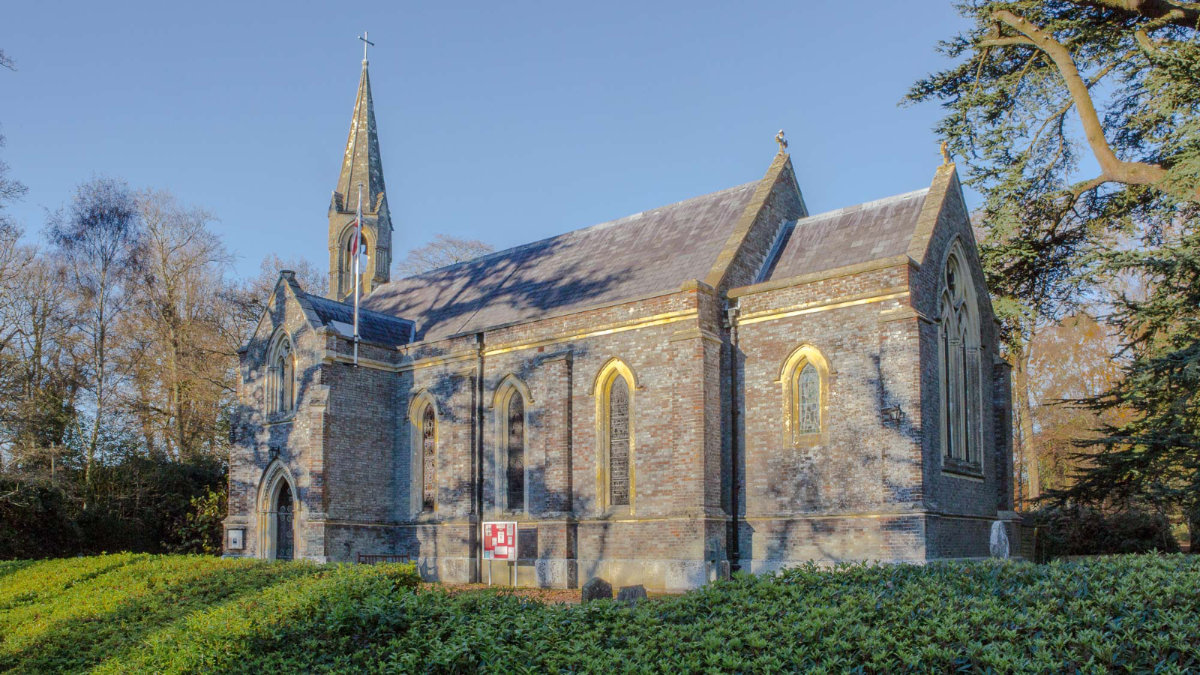
St Mark is located in woodland at the north end of the village of Ampfield. It has an adjoining room with kitchen which can be hired.
John Keble, leading figure in the ‘Oxford Movement’ and the Anglo Catholic revival in the 1860’s, supervised the building of St Mark. The Friends of St Mark help keep this valuable historical building viable and thriving, hosting a variety of fundraising events across the year. Keep an eye on our calendar for dates.
Today, the church is open for pilgrims and visitors alike 10am - 4pm weekdays. If you are intending to travel a long distance we welcome advance contact from visitors.
Accessibility and Facilities
Parking: there is a small car park (holds 8-10 cars) and additional parking on the road, both of which are 75 metres along gravel paths from the church building. It is possible to bring a car closer to the church building by prior arrangement.
Toilets: there is an accessible toilet with baby change facilities available off St Mark’s room.
Floor levels: the entrances to both the main church building and St Mark’s room do involve steps but we have temporary ramp to facilitate wheelchair access to the church and rubber ramps to access St Mark’s room. There are steps between the church and the room.
Seating: St Mark’s church has pews with a wide aisle.
Services: There is a modern sound system with integrated T Loop. For Communion services we use service sheets and hymn books and have larger print versions available; music is from a traditional organ or CD played through the sound system. Books and toys are available for small children in the church, with more in St Mark’s Room. For Cafe church we use a projector and music is guitar and piano led.
History
St Mark was founded as a chapel for Ampfield in the enormous parish of Hursley in 1838. John Keble was Vicar of Hursley at that time. This new church was a laboratory for Keble, and the Oxford Movement’s ideas about ritual and liturgy in worship and what sacred architecture and a ‘sacramentally meaningful’ church might look like in Victorian England.
For theological reasons Keble and his co-leaders of the Oxford Movement rebelled against their view of a Church of England afflicted by barren buildings and slackness of worship. St Mark and the other ‘new’ churches in Hursley Parish were to be workshops for this liturgical and architectural insurgency.
Every element of St Mark’s design: from the repeated groups of three steps, signifying the Trinity, to the conscious, if free copying, of medieval windows remains as a memorial to Keble’s intent. Equally, internally the design was equipped for a rich and sacramental worship.